Coolant filtration for grinding & honing applications
FSE’s Vacuum Filter System is a high-performance coolant filtration solution for grinding machines, designed to deliver fine filtration down to 20 microns.
Engineered for grinding, honing and high-precision finishing processes, this media-based vacuum filter system provides consistent coolant clarity and extended coolant life and enables improved surface finish quality.
Suitable for single machine tools or full central coolant filtration systems, FSE vacuum systems are trusted across aerospace, automotive and high-precision manufacturing sectors, including titanium grinding, vane and Viper blade grinding.
If you are looking for the best filtration system for grinding machines, FSE’s vacuum filtration technology offers proven reliability and performance.
Speak to our sales team today about systems to suit your business.
What is a vacuum filter system?
A vacuum filter system is an industrial coolant filtration system that uses vacuum pressure to draw contaminated coolant through a filter media bed.
In grinding and honing applications, fine particles such as grinding sludge, carbide dust, wheel debris and metallic fines can rapidly contaminate coolant. Without effective filtration:
Surface finish quality can suffer
- Tool life is reduced
- Coolant life decreases
- Machine downtime increases
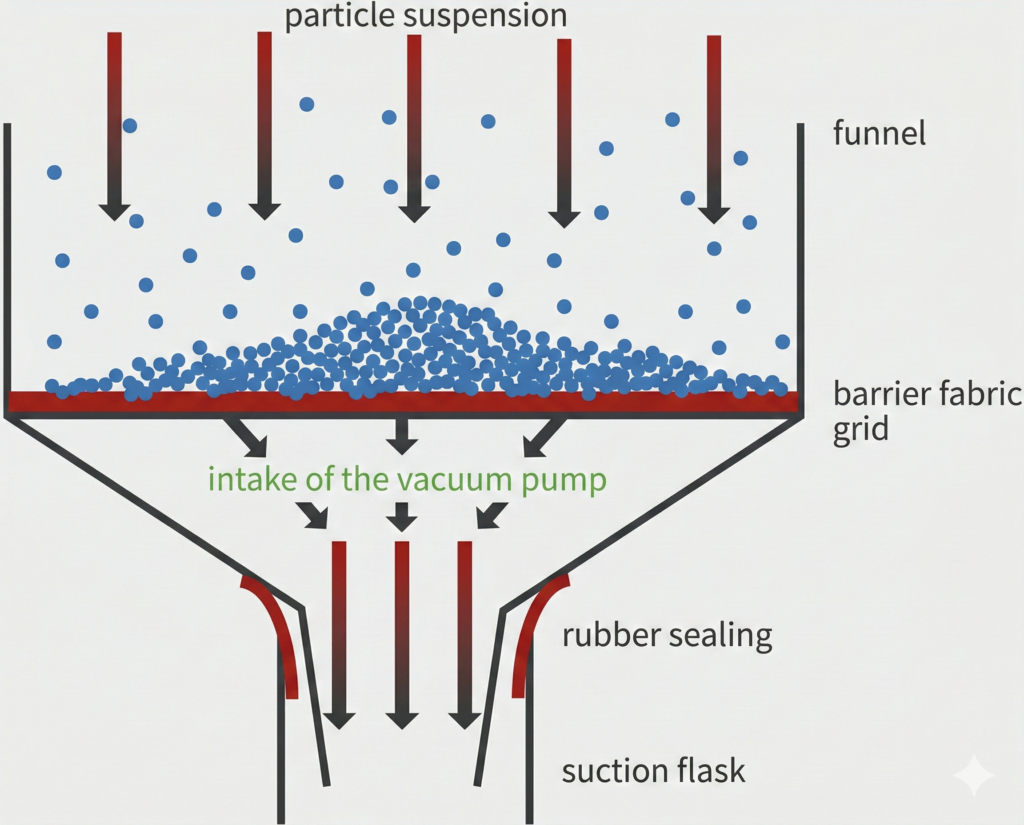
The FSE vacuum water filter system uses controlled vacuum pressure to pull coolant through filter paper, separating fine grinding debris while returning clean coolant back to the machine/s.
How the Vacuum Filter System Works
The system operates using a media-based filtration process:
1. Contaminated coolant flows into the vacuum filter unit.
2. Vacuum pressure draws the coolant through disposable filter media.
3. Fine particles are captured above the filter bed.
4. Clean coolant is returned to the machine tool or holding tank
One of the key advantages of this design is the large surface area of the filter bed. Debris intentionally builds up on the media, forming an additional filtration barrier. This “cake” increases filtration efficiency while reducing overall filter paper consumption.
The result is stable filtration performance, even in high-volume grinding sludge filtration systems.
Benefits of FSE Vacuum Filter Systems
1. Fine Filtration Down to 20 Microns
Ideal for precision grinding, honing and finishing operations.
2. Extended Coolant Life
Removes fine grinding sludge and metallic particles that accelerate coolant breakdown.
3. Improved Surface Finish
Cleaner coolant improves part quality, particularly in blade grinding and high-precision applications.
4. Reduced Consumable Usage
Optimised media consumption lowers operating costs.
Scalable for Single or Multiple Machines
Suitable for standalone grinding machines or full central coolant plant installations.
What are the best filtration systems for grinding machines?
Grinding applications generate significantly finer particles than standard milling or turning operations. A standard chip management system is often not suitable for grinding sludge.
The FSE Vacuum Filter System is specifically designed for:
- Surface grinding
- Cylindrical grinding
- Tool grinding
- Viper grinding applications
- Titanium grinding filtration systems
- Coolant filter for blade grinding
For OEM integrations and specialist installations, FSE can engineer systems to suit specific machine platforms including Makino filtration system requirements and other high-performance grinding centres.
Central Coolant Filtration & Large Coolant Systems
For facilities operating multiple grinding machines, FSE can design and install a complete central coolant filtration system, typically combined with Vacuum Filter technology.
A central coolant system offers:
- Improved coolant consistency across machines
- Reduced maintenance requirements
- Centralised sludge removal
- Simplified monitoring and servicing
- Lower total coolant consumption
Whether you require a compact vacuum system filter for a single machine or a large coolant system serving an entire grinding cell, FSE can specify the correct configuration.
Grinding Sludge Filtration & Titanium Applications
Grinding titanium and other hard materials generates extremely fine particles that demand high-efficiency filtration.
FSE vacuum systems are particularly well suited for:
- Titanium grinding filtration systems
- Aerospace blade manufacturing
- High-precision finishing applications
- Viper grinding coolant filtration
Effective removal of grinding sludge protects pumps, improves coolant stability and supports consistent machining performance.
Vacuum Filter Systems supplied, installed and supported by FSE
FSE provides complete UK & Worldwide support including:
- System consultation and specification
- Installation and commissioning
- Integration with existing coolant systems & machines
- Service and preventative maintenance
- Ongoing technical backup
Our engineers ensure your coolant filtration for grinding machine applications is optimised for performance, efficiency and long-term reliability.
Speak to our sales team today about systems to suit your business.
Contact us via email at sales@fse.co.uk or call us on 01562 60233
Chip Management & Coolant Filtration solutions from FSE
Whether you are replacing an existing system or upgrading your existing coolant management & filtration solutions FSE can help.
To speak to the FSE team today about chip management & coolant filtration solutions to suit your business, contact us at sales@fse.co.uk or 01562 60233 or by using our online enquiry form.
Frequently asked questions about vacuum filter systems
A vacuum filter system is used to remove fine particles and grinding sludge from coolant in precision machining applications. It is most commonly used in grinding and honing environments where extremely fine contamination is generated.
By using vacuum pressure to draw coolant through filter media, the system captures fine metallic particles and returns clean coolant to the machine or central coolant system.
The vacuum filter reduces footprint compare to traditional gravity paper filters and also greatly improves filtration consistency.
The best filtration system for grinding machines is one that can reliably remove very fine particles — typically down to 10 microns or below — while maintaining stable coolant flow.
For grinding applications such as surface grinding, cylindrical grinding, blade grinding or viper grinding, a media-based vacuum filter system is often the preferred solution. It is specifically designed to manage grinding sludge and ultra-fine metallic debris that standard chip conveyors cannot effectively remove.
The vacuum filter is a tried and tested solution which has been in operation worldwide for well over 50 years.
Yes. Titanium grinding filtration systems require high-efficiency separation due to the fine and often reactive nature of titanium particles. A vacuum filter system with fine media filtration is particularly well suited for aerospace and high-precision titanium applications.
Efficient sludge removal improves coolant stability and supports consistent machining performance.
Yes. Viper grinding generates high stock removal rates and significant fine particulate contamination. A coolant filter for viper grinding must provide reliable, continuous fine filtration.
FSE vacuum filter systems are designed to handle these demanding conditions while maintaining stable coolant flow and filtration performance.
Yes. Vacuum filtration units can be configured as part of a central coolant filtration system or central coolant plant serving multiple grinding machines.
A central coolant system provides:
- Consistent coolant quality across machines
- Reduced maintenance duplication
- Improved monitoring and control
- Lower overall coolant consumption
FSE can design both standalone and large coolant system installations depending on production requirements.
FSE vacuum filter systems can achieve filtration levels down to approximately 10-20 microns, depending on the media selected and application requirements.
The build-up of debris on the filter bed further enhances filtration performance, creating an additional barrier to ultra-fine particles.