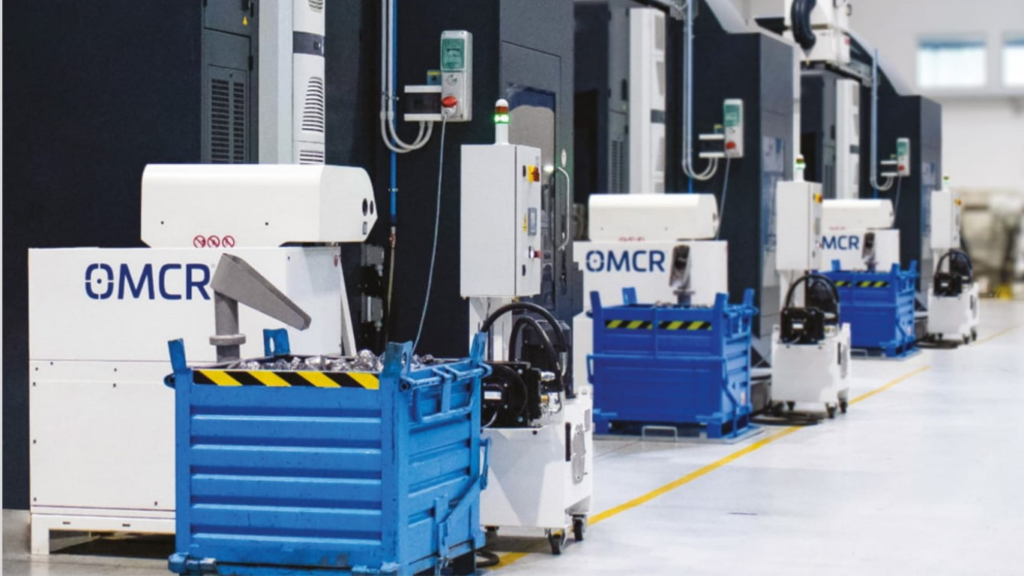
Advanced swarf management & metal swarf recycling solutions
A swarf briquetting machine is a high-performance swarf management solution designed to reduce swarf volume, recover valuable cutting fluids and transform metal waste into a recyclable resource.
Manufactured by OMCR Industrial Solutions and supplied and supported in the UK by FSE, OMCR briquetters provide a smart, sustainable approach to metal swarf recycling in modern machining environments.
By compacting loose swarf metal into dense, dry briquettes, the system can reduce swarf volume by up to 80% and recover up to 90% of residual coolant — improving housekeeping, reducing disposal costs and increasing material resale value.
For manufacturers looking to improve swarf management systems and support unmanned production, the OMCR briquetting machine offers a proven and energy-efficient solution.
What is a briquetting machine?
A briquetting machine compresses loose swarf metal into solid, compact briquettes using high hydraulic pressure.
During machining operations, large volumes of metal swarf are generated. In loose form, this material:
- Occupies significant storage space
- Retains expensive cutting fluids
- Creates handling and housekeeping issues
- Increases disposal and transport costs
The briquetter feeds swarf into a compression chamber where the material is compacted into dense briquettes. At the same time, residual coolant is extracted and returned to the system for reuse.
This process transforms waste into a manageable, recyclable product.
Why is Swarf Management Important?
Effective swarf management is essential in high-output machining environments, particularly where automation and unmanned production are used.
Poor swarf management can lead to:
- Conveyor blockages
- Excessive bin handling
- Coolant loss
- Increased manual intervention
- Higher waste disposal costs
By integrating a briquetting machine into your swarf management system, you can streamline material handling, reduce downtime and improve overall production efficiency.
Speak to our sales team today about Swarf Briquetter systems to suit your business. Contact us via email at sales@fse.co.uk or call us on 01562 60233
Benefits of swarf briquetters
Supports unmanned production
High chip production during automated or overnight machining can cause bin overflow and conveyor jamming. The OMCR briquetter reduces handling interruptions and helps maintain continuous production.
Swarf volume reduced by up to 80%
Loose swarf is compressed into dense briquettes, reducing storage volume by up to eight times. This significantly lowers bin handling frequency and transport requirements.
90% reduction in coolant waste
Residual cutting fluids are extracted during compaction and collected for reuse. This reduces coolant consumption and operating costs while supporting environmental objectives.
Increased metal swarf recycling value
Compact briquettes provide higher melting yield and improved scrap resale value compared to loose swarf. This enhances your return from metal swarf recycling.
Manual handling and intervention are reduced
By minimising bin emptying operations, the system improves operator safety and reduces forklift movements within the facility.
Improved sustainability & environmental protection
Compacted swarf reduces the risk of coolant spillage during transport and lowers CO₂ emissions through more efficient logistics.
Compactable Materials

Swarf briquetting machines can process a wide range of materials, including:
- Steel
- Cast iron
- Aluminium
- Copper
- Brass
- Grinding sludge
Material testing can be conducted to evaluate compaction performance and briquette density for specific applications.
Contact us via email at sales@fse.co.uk or call us on 01562 60233
Standalone & Centralised Swarf Management Systems
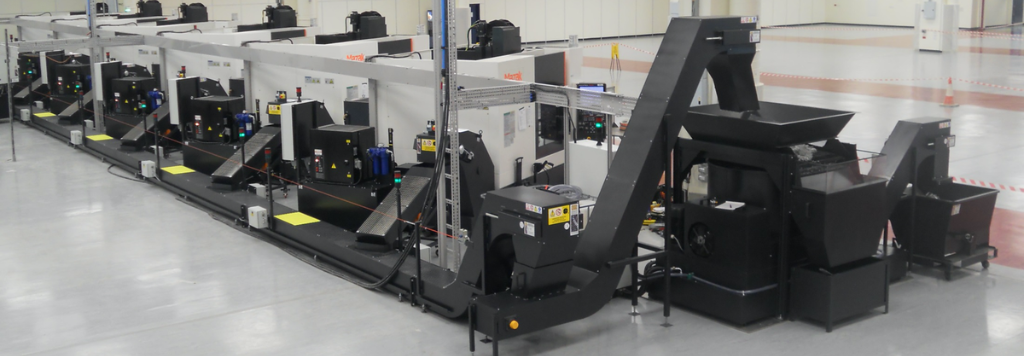
FSE can supply OMCR briquetters as:
Standalone Solutions
Ideal for individual machines or cells where localised swarf management is required.
Centralised Solutions
Designed for facilities with multiple machining centres, enabling high-volume chip processing through integrated swarf management systems.
Optional features such as anti-accumulation mixers ensure consistent feeding performance, particularly with small or stringy chips.
Industry 4.0 & Smart Integration
OMCR briquetting machines are equipped with advanced control systems, including user-friendly interfaces and remote monitoring capabilities.
Systems can be networked to integrate into wider production processes, supporting:
- Production monitoring
- Performance tracking
- Preventative maintenance planning
- Automated operation during unmanned shifts
This makes the OMCR briquetter suitable for modern Industry 4.0 manufacturing environments.
Swarf briquetter solutions supplied and installed by FSE
FSE provides complete support for swarf briquetting machines across the UK, including:
- Sales advice and system specification
- Integration with existing swarf conveyors
- Installation and commissioning
- Service and maintenance support
- Technical advice on swarf management solutions
With extensive experience in coolant filtration, chip handling and swarf management systems, FSE ensures your briquetting machine is correctly specified for your production requirements.
Speak to our sales team today about which type of swarf briquetter solution is right for your business or read the brochure here.
Contact us via email at sales@fse.co.uk or call us on 01562 60233
Machine Tool Accessories from FSE
Whether you are replacing an existing system or upgrading your machine tool systems, FSE can help.
To speak to the FSE team today about machine tool accessories, contact us at sales@fse.co.uk or 01562 60233 or by using our online enquiry form.
Frequently asked questions about Swarf Briquetting machines
Automated swarf briquetters can reduce / remove bin overflow and conveyor jamming. The OMCR briquetter reduces the need for manual intervention which helps maintain continuous production
Metal swarf recycling offers several financial and environmental benefits:
- Higher scrap resale value
- Reduced transport costs
- Lower waste disposal fees
- Improved melting yield
- Reduced environmental impact
By using a briquetting machine, manufacturers can significantly increase the value recovered from metal swarf while reducing overall waste management costs.
The most efficient way to dispose of metal swarf is to process it before removal from site.
Loose, wet swarf takes up space and contains valuable cutting fluids. By integrating a briquetting machine into your swarf management system, you can:
- Reduce volume
- Recover coolant
- Improve scrap value
- Minimise transport requirements
Rather than treating swarf as waste, briquetting allows companies to convert it into a recyclable commodity.
OMCR briquetting machines can process a wide range of materials, including:
- Steel
- Cast iron
- Aluminium
- Copper
- Brass
- Grinding sludge
Material type and chip form will influence the achievable volume reduction and briquette density.
For ductile swarf, volume reduction can be up to 80%.
For tougher or more springy materials, reduction is typically lower but still significant — often around 50%.
Reducing swarf volume lowers bin handling frequency, frees up factory space and improves housekeeping standards.
A briquetting machine can recover up to 90% of residual cutting fluids trapped in swarf.
Recovered coolant can be returned to the machining process, reducing:
- Coolant purchasing costs
- Waste fluid disposal
- Environmental impact
This makes briquetting a key component of sustainable swarf management systems.
Yes. High chip production during automated or overnight machining can cause conveyor blockages and bin overflow. Installing a briquetting machine reduces swarf build-up and supports continuous production.
For facilities running lights-out manufacturing, briquetting helps maintain reliable chip evacuation and reduces manual intervention.
Yes. Metal recyclers typically pay more for clean, dense briquettes than loose, wet swarf. Briquettes:
- Contain less residual fluid
- Offer improved melting efficiency
- Are easier to handle and transport
This increases the overall value recovered from metal swarf recycling.
Yes. OMCR briquetting machines can be supplied as standalone units or integrated into centralised swarf management systems serving multiple machines.
FSE can design and specify a solution based on:
- Chip type
- Production volume
- Automation level
- Space constraints
For ductile swarf, volume reduction can be up to 80%.
For tougher or more springy materials, reduction is typically lower but still significant — often around 50%.
Reducing swarf volume lowers bin handling frequency, frees up factory space and improves housekeeping standards.
A briquetting machine can recover up to 90% of residual cutting fluids trapped in swarf.
Recovered coolant can be returned to the machining process, reducing:
- Coolant purchasing costs
- Waste fluid disposal
- Environmental impact
This makes briquetting a key component of sustainable swarf management systems.
Yes. High chip production during automated or overnight machining can cause conveyor blockages and bin overflow. Installing a briquetting machine reduces swarf build-up and supports continuous production.
For facilities running lights-out manufacturing, briquetting helps maintain reliable chip evacuation and reduces manual intervention.
Yes. Metal recyclers typically pay more for clean, dense briquettes than loose, wet swarf. Briquettes:
- Contain less residual fluid
- Offer improved melting efficiency
- Are easier to handle and transport
This increases the overall value recovered from metal swarf recycling.
Yes. OMCR briquetting machines can be supplied as standalone units or integrated into centralised swarf management systems serving multiple machines.
FSE can design and specify a solution based on:
- Chip type
- Production volume
- Automation level
- Space constraints